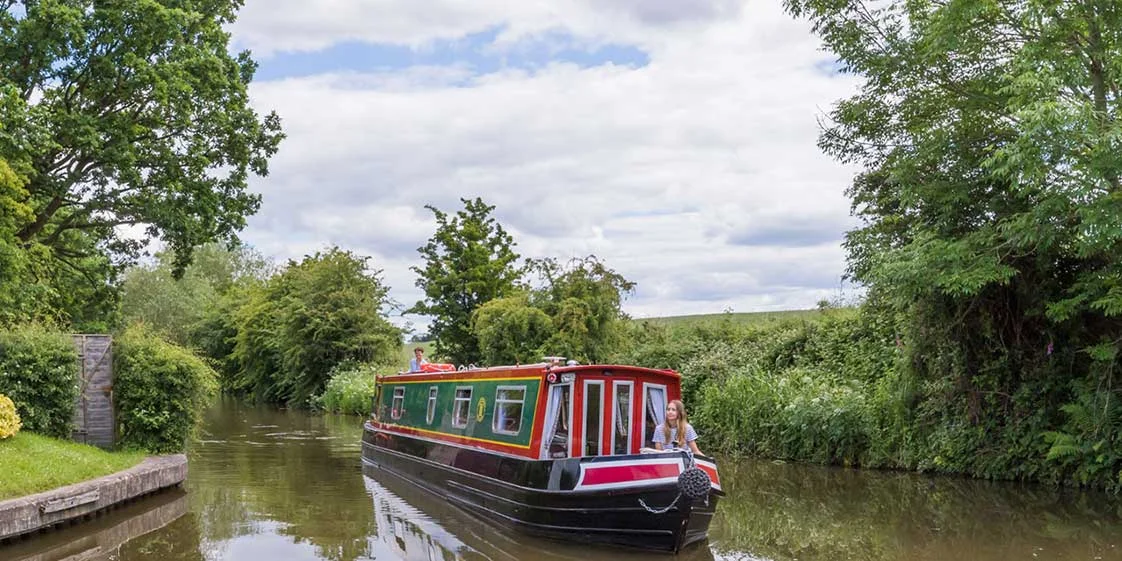
Britain’s rivers and canals weave across the landscape, linking regions together while nurturing a variety of wildlife. Gliding along on a canal boat holiday offers a front-row seat to this thriving world, where birds, insects and other creatures make their home along the water’s edge.
Even in the heart of bustling cities like Birmingham, these man-made waterways can support a surprising array of unexpected visitors – wildlife you’d never imagine spotting so close to urban life. Ready to see what’s out there? Discover the fascinating canal wildlife waiting to be spotted on your narrowboat holiday.
What animals live along canals?
Keep your eyes peeled for some of the UK’s wildlife as you drift along the waterways, from the dazzling flash of a kingfisher’s wings to the quiet presence of badgers and even bats emerging at dusk.
- Mammals
- Amphibians
- Reptiles
- Fish
- Birds
- Insects and other invertebrates
Types of animals and insects that live along canals
Canal paths are home to more than just birds and insects. While many species live in or near the water, you may also spot grazing sheep, curious cows, or horses, goats, and chickens along the way. Look out for reptiles like grass snakes basking in the sun, or deer such as red, roe, and muntjac at dawn and dusk in countryside stretches.
Mammals
|
Fish
|
Insects
|
Amphibians
|
Types of birds that live along canals
No canal journey would be complete without the lively chorus of canalside birds. Along your adventure, you’re likely to witness a wonderful variety of species. Some of the birds you’re most likely to spot include:
- Barn owl
- Canada goose
- Coot
- Cormorant
- Grey heron
- Kestrel
- Kingfisher
- Mallard duck
- Moorhen
- Swan
Tips to spot wildlife on the canal
From hedgehogs to herons, the waterways are teeming with creatures. Along the towpath, keep an eye out for nesting birds, sheltering mice and the occasional frog or toad. You might even be lucky enough to catch a glimpse of a shy water vole burrowing in the canal banks! The abundance of wild plants and flowers attracts countless insects, all of which support this vibrant ecosystem.
Here are some handy tips to help you make the most of your wildlife spotting on the canal:
- Be patient and observant: Wildlife often reveals itself when you least expect it. Take your time, move quietly and scan your surroundings carefully.
- Use binoculars: These allow you to enjoy close-ups of birds and animals without disturbing them, especially species that are easily startled.
- Go slow with the boat: A gentle cruising speed minimises noise and gives you a better chance to spot creatures along the banks and in the water.
- Venture out in quieter times: Early mornings and evenings are when many animals are most active.
- Watch the water’s edge: Many creatures like to stay close to the banks where there’s food and cover.
For more detailed advice, read our full guide on bird spotting on the canals.
Plants and foraging
UK canals aren’t just a haven for wildlife, but they’re also rich with plant life waiting to be discovered. From edible herbs and berries to natural decorations like holly and ivy, a canal boat holiday offers plenty of treasures for keen foragers and nature lovers alike.
Trees
- Willow
- Oak
- Ash
- Sycamore
- Horse chestnut
Flowers
- Ivy-leaved toadflax
- Red deadnettle
- Ivy
- Daisy
- Shepherd’s purse
- Lesser celandine
Wild food
- Blackberries
- Elderberries
- Meadowsweet
- Apples
- Damsons
- Water mint
- Horseradish
- Hazelnuts
- Dandelions
- Rose hips
- Nettles
- Dandelions
- Wild garlic
- Bramble leaves
- Hairy bittercress
- Chickweed
Tips for foraging
- Only pick what you know: Never eat anything unless you’re 100% sure of its identity.
- Forage sustainably: Take only what you need and leave plenty behind for wildlife and other foragers.
- Wash before eating: Always clean plants, berries and herbs thoroughly before cooking or consuming.
- Avoid polluted areas: Steer clear of plants growing by busy roadsides or in places where chemicals may have been used.
- Test your tolerance: When trying something new, start with a small amount to check that it agrees with you.
- Handle plants with care: Use gentle picking methods to avoid damaging the environment.
Why are canals important in the UK?
Britain’s canals are thriving lifelines for nature. The rich food supply and varied habitats provide support for a range of wildlife – generations of canal animals have lived near and around the areas you’re likely to spot them. In a country where urban developments continue to expand in once-rural areas, canals are sanctuaries for these animals. They not only help conserve biodiversity but also offer spaces where nature and people can coexist.
Canals in the UK play an essential role by:
- Supporting biodiversity by offering safe habitats for countless species to breed and thrive
- Encouraging pollination among wildflowers for bees and butterflies
- Providing green spaces in urban areas to give wildlife refuge and encourage people to reconnect with nature
- Adding colour to the landscape with vibrant plant life and rare wildlife
Protecting the UK waterways isn’t just about preserving the past, it’s also safeguarding the future of both wildlife and our own wellbeing.
How does ABC Boat Hire protect canal wildlife?
You can discover the sustainable acts we carry out at ABC Boat Hire to protect canal wildlife and the condition of the waterways, here.
The best routes for spotting canal wildlife in the UK
Looking for the ideal spots to see rare wildlife? ABC Boat Hire’s canal boat holidays have this covered, with many of our routes passing through the stunning landscapes of multiple regions. Relax, unwind and watch wildlife up close. Find out more about our trips on our Routes Page.
Birdwatching in Huntingdon
For excellent sightings of some of the UK’s most impressive birds, such as kingfishers and nightingales, we recommend visiting the Godmanchester Nature Reserve.
For more information on this trip click here.
Otters and Pond-Dipping in The Four Counties Ring
Perfect for families, this route takes you through the Doxey Marshes in Staffordshire – a haven for canalside creatures. Keep your eyes peeled for otters, harvest mice and water shrews as you explore this beautiful reserve.
The journey begins at Blackwater Meadow Marina and winds through the glorious countryside. Along the way, you’ll also travel the Staffordshire & Worcestershire Canal to Great Haywood Junction, where sightings of otters, dragonflies and water birds are common. Other highlights include roving bridges and historic potteries.
For more information on this trip, click here.
Snarestone & Return from Springwood Haven
This peaceful, lock-free cruise offers a mix of rich history with abundant wildlife. As you glide along the Ashby Canal, watch for the flash of a kingfisher and gaze at the open farmland. This route provides plenty of opportunities to spot a range of animals while soaking in the serene surroundings that a canal boat holiday offers.
Explore more about this short break, here.
Great Haywood & Return from Gailey Marina
Expect picturesque landscapes across idyllic countryside, with wildlife at every turn on this short three-night cruise. You may see bats at dusk and terrapins sunning themselves along with water birds soaring across the canal. One of the highlights is Tixall Wide, a meadow designated as a Site of Special Scientific Interest, where a variety of nesting birds can be admired.
Take a look at this quick getaway, here.
Wiltshire Boating Holidays
Departing from Hilperton Marina on the Kennet and Avon Canal, this route is perfect for nature lovers. The canal is renowned for its breathtaking beauty and is home to an abundance of wildlife. Here, you might be able to spot the elusive water vole, one of the UK’s most endangered species, often burrowing into the banks to build nesting chambers.
Explore the rest of the route, here.
Additional wildlife adventures in the UK (bonus guide!)
While our canal boat routes offer incredible opportunities to spot common and rare wildlife, here are a few hand-picked experiences around the UK worth visiting on land.
Isle of Wight
The Briddlesford Copse is a large area of land dedicated to conservation, and at certain times of the year the woodland is open to the public. These woodlands support an important breeding population of the rare Bechstein’s bat. The bats use holes and crevices in mature trees for roosting and the interconnecting woodlands for feeding.
Bouldnor Forest is one of the few key locations in the UK where visitors can be lucky enough to catch sightings of adorable red squirrels. As no grey squirrels have ever been introduced to the island, their rarer cousins have had the opportunity to flourish.
Sandown Meadows Nature Reserve is recommended for sightings of water voles and contains a network of waterways where riverbanks have been constructed to encourage them to live and breed. For anyone looking to spot a water vole, the best advice is to put out some apples and return in early morning or late evening: if you’re lucky, you will be rewarded with a very special sighting.
Gloucestershire
The Forest of Dean introduced a pair of Eurasian beavers in 2018, where they are enclosed within 6 hectares of woodland. The best time to spot the beavers at Greathough Brook is during the spring and summer months, during early mornings or evenings when they emerge from their lodges.
Chilmark Quarries is a large site of special scientific interest, which has been a designated habitat for the Bechstein's bat since 2005. The site is comprised of a series of disused stone mines, which are the perfect environment for these rare bats to live and breed.
Greystones Farm Nature Reserve has a range of wildlife habitats, from wildflower meadows and hedgerows to the banks of the River Eye, where water voles can be spotted.
Sussex
Ebernoe Common is home to 13 of the 16 species of bat which live in the UK, including the rare Bechstein’s and barbastelle bats. These rare species of bat rely on ancient mature woodland, making the ancient trees, ponds and pastures of Ebernoe Common an ideal habitat.
Kingley Vale National Nature Reserve is a special area of conservation and one of the few spots in the UK where you might be lucky enough to see the beautiful and elusive turtle dove. These gentle birds are most commonly spotted in the late spring and summer months, although they can usually be heard more than seen, and their distinctive song was once a characteristic sound of summer throughout southern regions of England.
Arundel Wetland Centre reintroduced water voles in 2005, and their population has since been thriving. Visit this stunning location for a good chance at spotting these tiny riverside creatures, which were the basis for the character of Ratty from Wind in the Willows. Other species like dormice were also discovered here in 2007.
Scottish Highlands
Scottish wildcats are possibly the rarest and most highly endangered animals that currently reside in the UK. 2025 figures estimate between 100 and 300, with a conservation programme ongoing to breed and release captive-bred kittens back into the wild to boost numbers.
The specific locations that you can visit to catch a glimpse of these incredible creatures are all located in Cairngorms, the Black Isle, Aberdeenshire, Isle of Mull, Angus Glen and Ardnamurchan.
Need a hand finding your perfect wildlife spotting canal trip?
Chat with our friendly booking team today, or find a route with our booking form at the top of the page.