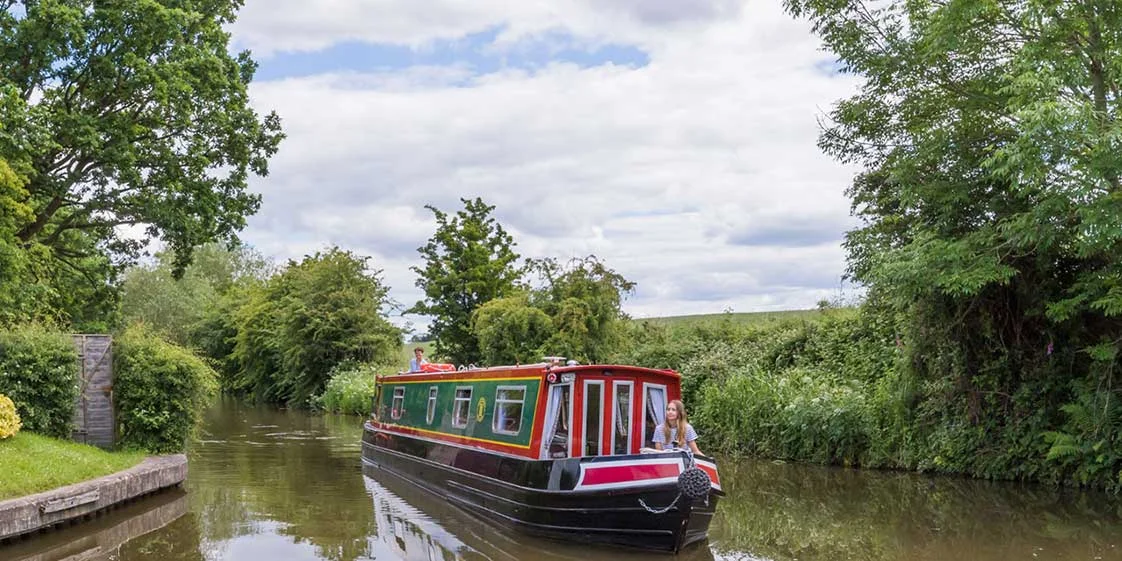
The main recommendation we make as a canal boat holiday provider with over 45 years of experience is to be moored up before 8pm, even in the lighter months of the UK summer. This ensures you have plenty of time to moor up with enough daylight, or if you get delayed, you still have a few hours to find your home for the night.
Can you drive a canal boat at night?
Yes, you can drive a canal boat at night, but it’s not allowed on all canal navigation in England, Wales and Scotland. Some authority byelaws even prohibit boating at night on certain waterways, like the River Wey, Middle Level Navigations, and the Chelmer & Blackwater Navigations.
It’s difficult due to the lack of lighting along the waterways, but it’s not impossible. There are also the exceptions of having to cruise in the dark if there’s an emergency, if you need to move after a short-notice stoppage or simply from a delayed calculation of reaching your next mooring.
However, when you hire a boat with holiday providers like ABC Boat Hire, even for a day, you’re not permitted to navigate a narrowboat after dark. Our boating hours are from dawn to dusk, which is because of providers’ insurance policies restricting travel at night. But you could also risk damaging the boat or injuring you and your passengers.
It’s also strongly recommended that you don’t travel along the canals when it’s snowing or icy.
3 Factors to Consider for Boating at Night
Even though it’s possible to drive a canal boat at night, night cruising should be avoided unless absolutely necessary. It’s especially important to remember you’re not permitted to travel at night on an ABC Boat Hire canal boat.
But if you do find yourself without any other option, there are three factors to consider for a safe cruise at night.
1. Etiquette
Even if you’re only travelling in the dark due to a delay or emergency, good boating etiquette still applies. This includes the ‘8-8’ rule, cruising between the hours of 8am and 8pm and keeping the noise down from engines and passengers before and after those hours.
If you do have to move after dark and you’re passing moored boats, keep voices low in popular mooring areas, avoid excessive revving, and try and keep to a slow, steady pace.
If you encounter boaters who ignore this etiquette, it can be reported to the Canal & River Trust using the boat’s index number and details of the incident.
2. Safety
Night cruising can be risky even for the most experienced narrowboaters. Canals are rarely well-lit, which affects your ability to judge distance, speed and obstacles. There could be overhanging branches, shallow banks or floating debris which are harder to spot in the night, increasing the risk of collisions.
Canal boats should display appropriate navigation lights after dark so they can be seen by others. While passengers aren’t responsible for operating these lights on ABC Boat Hire canal boats, understanding their purpose helps everyone appreciate why night travel is riskier than it appears.
3. Equipment
If you ever find yourself needing to move or moor up when it’s getting dark, it can be useful to have the right equipment onboard. This includes:
- Handheld torches to check the bank, line up a mooring or spot any hazards.
- Head torches to keep your hands free when stepping off the boat, handling ropes or navigating locks.
- Spare batteries or a backup torch are worth keeping just in case you need extra light.
If you’re looking for other boating tips, we have 10 essentials in our safety guide.
Where can you moor a canal boat at night?
You can moor almost anywhere alongside canal towpaths, as long as you’re not obstructing the navigable parts of the canal. It’s important to ensure you avoid mooring up next to lift bridges, blind spots and junctions, but you can read more about canal boat moorings in our guide.
Download the Free ‘Boaters Handbook’
At ABC Boat Hire, you’re never on your own. Along with 24/7 contact, you have access to a range of free, expert-approved canal resources, like this 60-page handbook that shares all things canal boating, including locks, bridges, ropes and more.
Become a Natural Boater at the Click of a Button
You may also want to read: